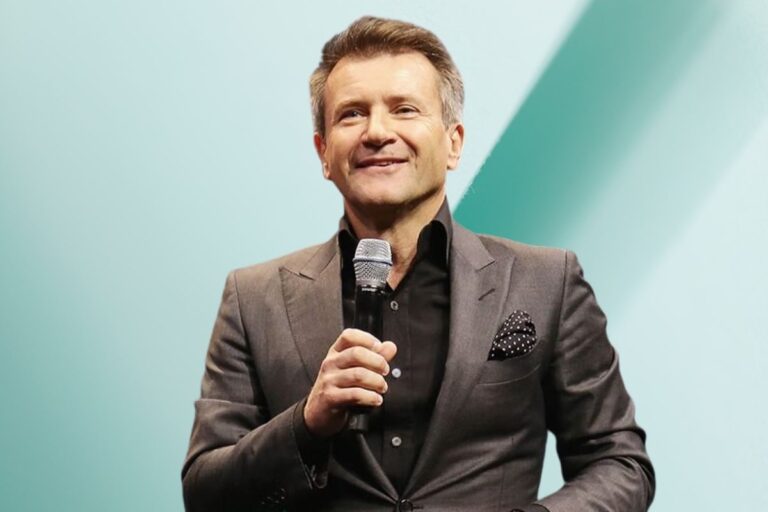
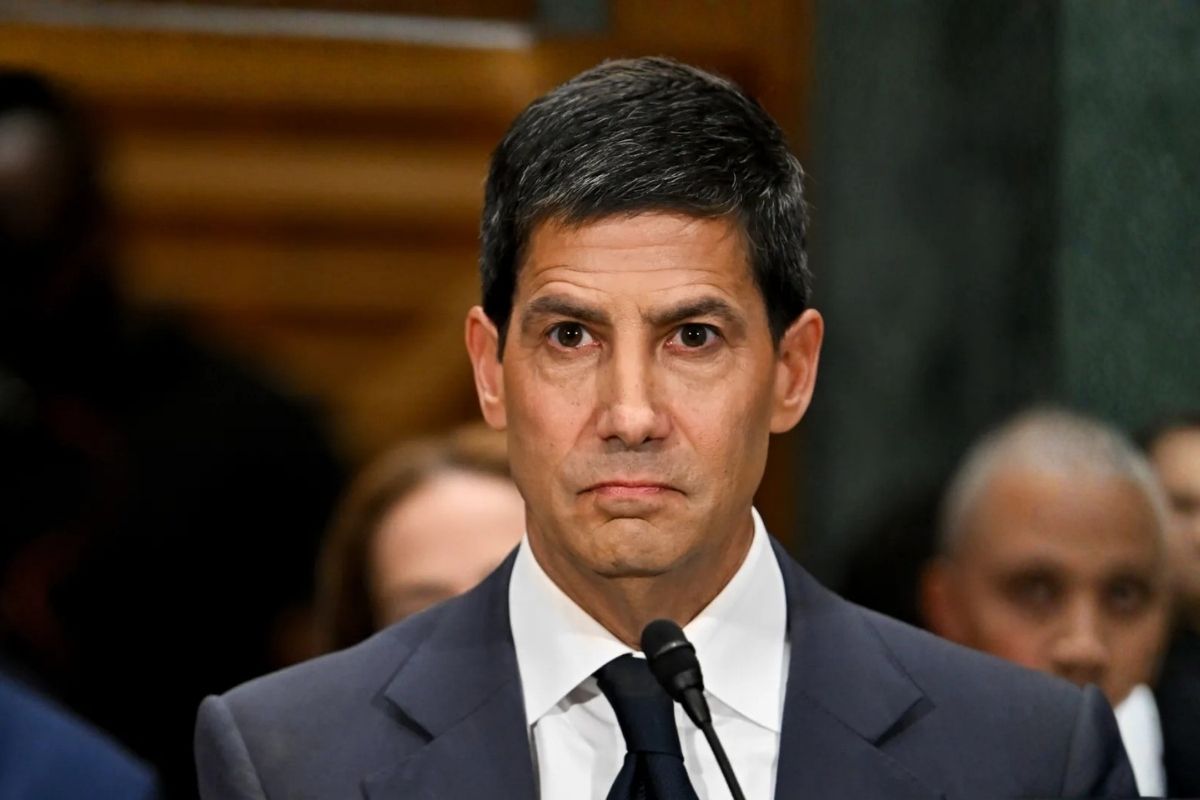
A seismic leadership shift is underway at the world’s most influential central bank. Change is coming to the Federal Reserve — even as interest rates are expected to hold steady. The central bank left its benchmark rate unchanged on Wednesday, at what is likely Jerome Powell’s last policy meeting as Fed chairman, with his replacement soon to be in place after Powell’s more than eight-year tenure.
So what exactly changes when Kevin Warsh takes the helm? Here’s a clear-eyed breakdown.
Who Is Kevin Warsh?
Warsh spent five years — from February 2006 to March 2011 — on the Board of Governors of the Federal Reserve and was a voting member of the Federal Open Market Committee (FOMC), the 12-person body responsible for setting the nation’s monetary policy. More recently, Warsh has been a fellow at the right-leaning Hoover Institution and a lecturer at the Stanford Graduate School of Business.
President Trump nominated him in January 2026, capping what was described as a months-long, highly publicised search for a new chair of the Federal Reserve, widely regarded as one of the most influential economic officials in the world.
How Did We Get Here?
The path to confirmation wasn’t smooth. Trump’s nomination of Warsh had been effectively blocked because of a Justice Department criminal investigation into Powell, centered on alleged cost overruns related to renovations at the Federal Reserve building.
Sen. Thom Tillis said he plans to support Warsh’s nomination after the DOJ dropped its criminal investigation into Powell. Tillis said he received assurances from the DOJ that it would only reopen the investigation if the Fed’s inspector general recommended criminal charges. With Tillis’s support, the confirmation of Trump’s pick to lead the Fed is all but assured.
Tillis’s announcement likely clears the way for a speedy confirmation of Warsh, a former Fed governor, to lead the central bank by the time Powell’s term expires on May 15.
What Policy Changes Can Markets Expect?
1. A Lean Toward Rate Cuts — But With Limits
Warsh is expected to push quickly for rate cuts, though he would need to convince his fellow members of the Fed’s rate-setting Federal Open Market Committee to join him. With energy prices rising sharply due to the war in Iran, many Fed members are likely to be skeptical.
Warsh himself tried to temper expectations during his confirmation hearing. “The president never asked me to commit to interest rate cuts at any particular meeting over the period of my tenure at the Fed,” Warsh said. “He didn’t ask for it. He didn’t demand it. He didn’t require it. And nor would I have ever done so.”
Crucially, even if he wanted to do the president’s bidding, Warsh couldn’t do so on his own — interest rates are set by the 12-person FOMC committee and the chair only gets one vote.
2. A Major Push to Shrink the Fed’s Balance Sheet
This may be Warsh’s most consequential policy departure from Powell. Warsh has been an unabashed critic of the Fed’s ballooning balance sheet, which is mainly comprised of long-term U.S. Treasury bonds and mortgage-backed securities, rising from less than $900 billion in August 2008 to almost $9 trillion by March 2022. Under Powell’s tenure, this balance sheet effectively doubled, before settling at $6.7 trillion as of April 22, 2026.
Warsh has rightly focused his attention on one of the most neglected features of the inflation problem: the Fed’s balance sheet. In his view, inflation cannot be understood only through the lens of short-term interest rates — it must also be understood through the central bank’s enormous footprint in long-term Treasury and mortgage markets.
3. A Different Inflation Measuring Stick
As Warsh sees it, neither PCE nor CPI is a sufficient barometer of price stability. His preferred instruments are “trimmed averages” that “take out all of the tail risks, all of the one-off items” to measure the “generalized change in prices.”
4. A Narrower Mandate for the Fed
Warsh has been a vocal critic of current Federal Reserve leadership, calling for “regime change” and criticising Powell for engaging on issues like climate change, which Warsh has said are outside the role’s mandate.
What Happens to Jerome Powell?
Powell doesn’t necessarily disappear. While his term as chair is coming to a close, Powell has the option to remain on the Fed’s governing board through 2028 — unusual, since most Fed chairs have stepped away completely when their terms were up.
Powell will likely want to stay on the board for a time to ensure that the investigation is truly over, as the Department of Justice said it reserved the right to restart it.
What the Critics Are Saying
Not everyone is celebrating. Sen. Elizabeth Warren of Massachusetts called the push to install Warsh “just an attempt to clear the path for Senate Republicans to install President Trump’s sock puppet Kevin Warsh as Fed Chair.”
Defenders counter that Warsh is exactly what is needed. Supporters describe him as serious about inflation, serious about restoring credibility, and serious about shrinking a central bank that has grown too large, too intrusive, and too erratic.
The Bottom Line
The transition from Powell to Warsh marks one of the most politically charged Fed leadership changes in modern history. Markets, borrowers, and global investors will be watching closely as Warsh navigates rate decisions, balance sheet reduction, and the ever-present pressure from the White House — all while trying to preserve the institutional credibility of America’s central bank.
Sources:
- CNBC — Tillis ends block of Fed chair nominee Warsh
- NPR — Jerome Powell’s last meeting as Fed chair
- NBC News — Tillis drops blockade of Trump’s Fed chair nominee
- CNBC — DOJ ends Powell probe
- The Motley Fool — Warsh signals major shift at the Fed
- The Hill — America cannot afford to wait — confirm Warsh now
- Al Jazeera — Trump nominates Kevin Warsh
- Kiplinger — April Fed Meeting Live Updates