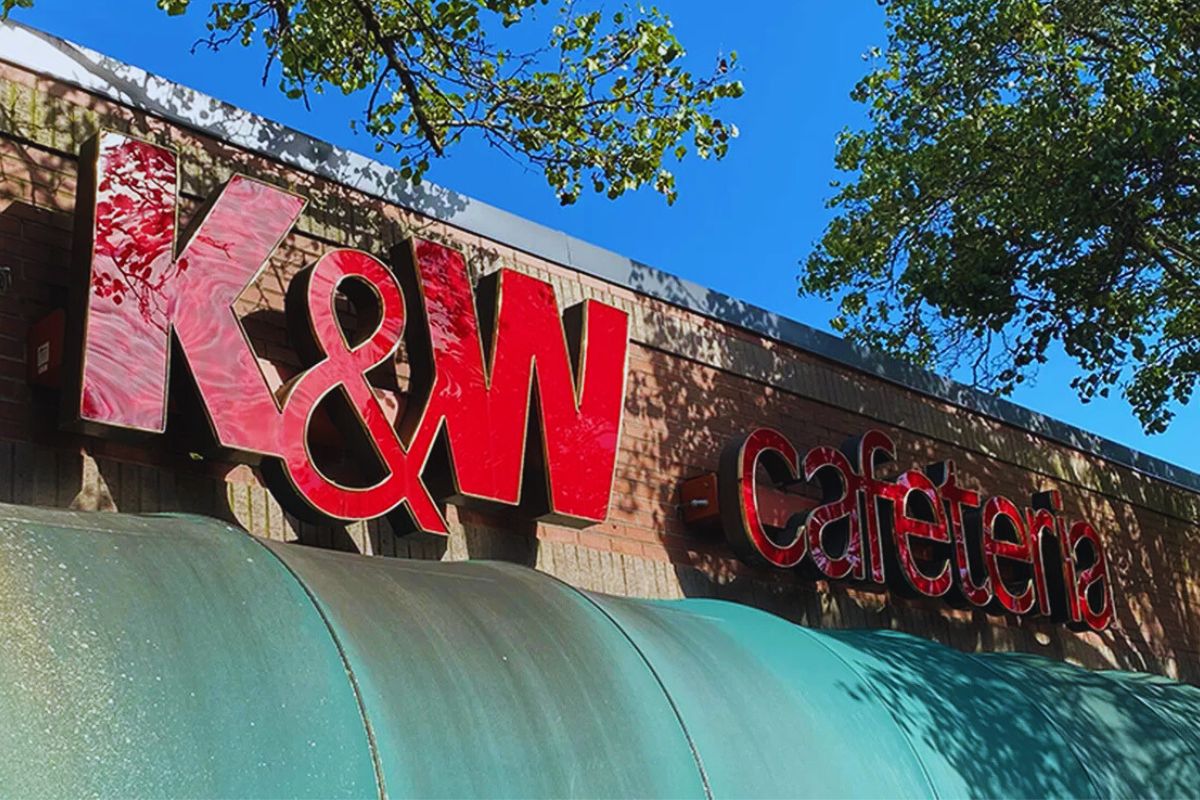
Monday morning, people showed up for work, and the doors were locked. That’s how it ended for the K&W Cafeteria. No warning. Just a Facebook post saying, ‘Thanks for 88 years; we’re done.’
All nine remaining restaurants shut down December 1st. Over 300 people lost their jobs right before Christmas. Customers who’d been eating there for decades found out the same way employees did. Through social media.
How This Started
But way back in 1935 some dude named Grady Allred got a gig on Thanksgiving Day at the Carolinian Coffee Shop in Winston Salem. The store was owned by the Wilson brothers and their brother-in-law, T.K. Knight. Two years later they rechristened it with the owners’ initials. Knight and Wilson. K&W.
Grady eventually purchased the whole thing in 1941. He had a simple idea. Cook Southern food from scratch, serve it buffet style so people can take whatever they want, and keep prices affordable. By 2020 the Allred family had grown it to 28 restaurants across North Carolina, Virginia, and South Carolina.
What You Got There
Walking into a K&W cafeteria meant grabbing a tray and going down a line. Hot food under warming lights. Everything your grandmother made for Sunday dinner is spread out in front of you.
Fried chicken. Mac and cheese with the brown crust on top. Green beans with bacon. Turnip greens. Fried okra. Mashed potatoes and real gravy. Baked spaghetti that somehow tasted right. Soft rolls if you got there early enough.
The K&W cafeteria menu wasn’t trying to impress anyone. Just food people grew up eating, made the way their families made it. You could load up three vegetables and cornbread for under ten bucks. Good luck finding that now.
Desserts sat at the end. Chocolate cream pie. Banana pudding. Cobbler. Church potluck sweets. Nothing fancy, just stuff that tasted like home.
When It All Fell Apart
COVID basically killed them. In September 2020 they filed bankruptcy. Nobody wanted to stand in line near other people. Nobody wanted food sitting under heat lamps everyone breathed on.
They came back in September 2021 but smaller. Cut from 28 locations down to 14. Employee count dropped from over a thousand to about 834. Sales kept falling. Down almost 25% from 2021 to 2024. Compared to 2019? Down nearly 70%.
A Texas company called Falcon Holdings bought them in 2022. Falcon owns Piccadilly Cafeteria too, another chain barely hanging on. By this year only 10 K&W cafeteria locations were still open. Then nine. Then zero. K&W Cafeteria shut all locations after 88 years with no warning. Workers, customers and a Southern food tradition were left stunned by the sudden closure.
The end of 2024 showed about $27 million in sales across those 10 locations. The average per store was roughly $2.57 million. Not enough to keep investors happy.
Why Monday Hit Hard
Zero warning. People who’d worked there for decades learned they had no job anymore from a Facebook post. One former worker said over 300 people got left jobless. No severance mentioned. No plan. Just thanks for 88 years, bye.
The company posted something about being a gathering place and Sunday traditions. All true. But it doesn’t help the hundreds of people who just lost their income right before Christmas.
Comments flooded with people begging for recipes. Folks sharing memories of Sunday dinners after church with their grandparents. Someone was talking about 40 years of going there. First dates and anniversaries and family reunions are all held at K&W.
What This Really Means
K&W Cafeteria wasn’t just restaurants. It was a piece of Southern culture that’s disappearing.
Cafeteria dining used to be everywhere down South. Affordable. No pretense. You stood in line with everyone, rich or poor. Picked what you wanted. Sat wherever there was space. Democratic in a way most restaurants aren’t.
But that style doesn’t work anymore. People want faster or fancier, or they want to eat at home, scrolling through their phones. Standing in line for vegetables off a steam table feels old-fashioned. Because it is.
The economics don’t work either. Food costs are up. Labor costs are up. Customers expect 2019 prices. Something gives, and usually it’s the business.
Corporate bankruptcies are hitting levels not seen since 2010. People don’t have money to eat out like before. And when they do, they’re picking fast casual chains, not sit-down cafeterias.
What Got Lost
There are still a few cafeteria chains hanging on. Piccadilly has some locations left. Luby’s filed bankruptcy and came back smaller. A handful of local places exist here and there.
But they’re dying. The generation that grew up eating at these places is getting older. Younger people don’t have the same connection. They didn’t grow up with grandparents taking them to K&W every Sunday. It’s not their tradition.
And traditions die when nobody carries them forward. You can’t force someone to care about fried okra and crusty mac and cheese if that’s not part of their food memory.
The Last Day
People who ate there right before the K&W cafeteria closing didn’t know it was their last time. That’s how these things go. You don’t know you’re having your final meal somewhere until it’s already over.
No farewell tours. No final specials. No chance to get that chocolate cream pie recipe. Just a locked door and a sign and memories that’ll fade.
In 20 years, kids in Winston-Salem won’t know what K&W was. A name their parents mention sometimes, maybe. Another place that used to be there.
Where We Are Now
The South is full of stories like this. Local places that close. Family businesses that can’t compete. Traditions that die because the economics don’t work or the culture moved on.
K&W lasted 88 years. Most restaurants don’t make it five. But good run or not, it’s over. The building will get sold. Someone else will move in. Life goes on.
Except for the 300 people who need new jobs. The families who lost their Sunday tradition. Everyone who won’t get to introduce their kids to that chocolate cream pie.
Those are small losses. Nobody’s writing history books about a cafeteria chain closing. But small losses add up. At some point you look around, and all the places that meant something are gone.
That’s December 2025. K&W closed. Another piece of the South disappeared. And we all just move on to whatever’s next, wondering why nothing feels quite the same anymore.