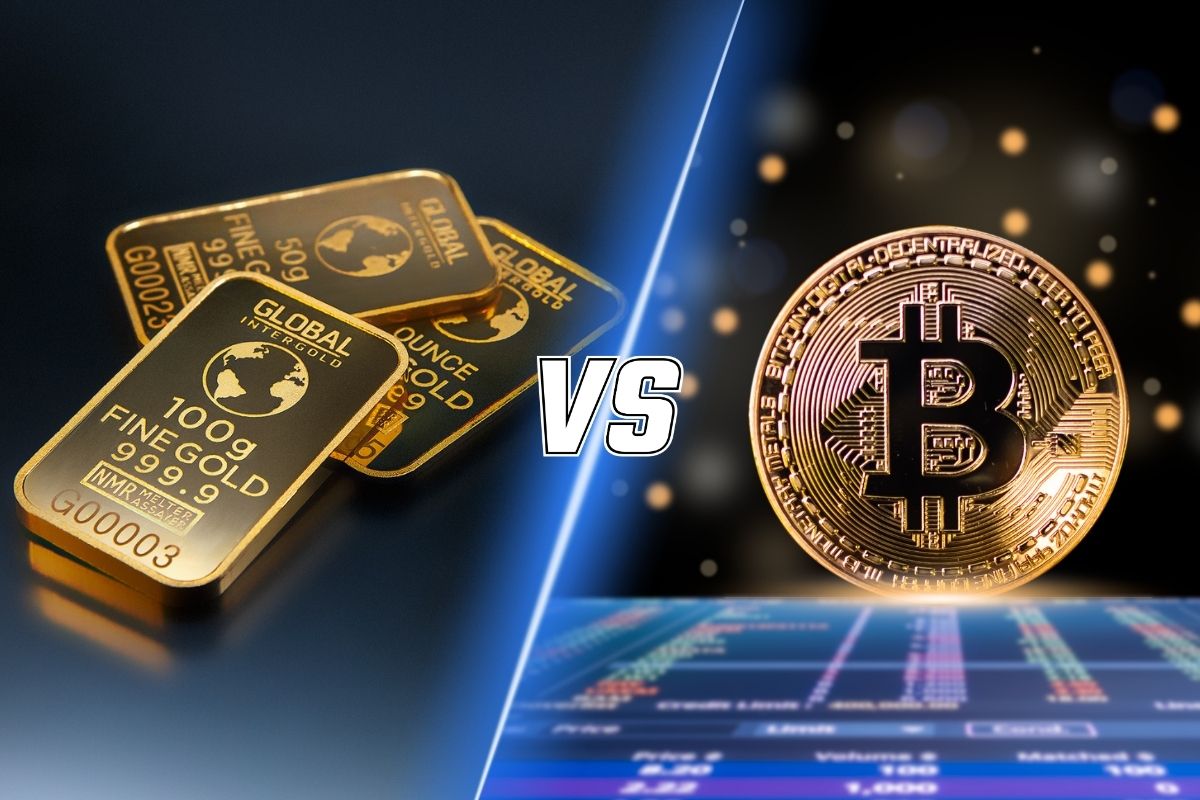
In today’s finance world, two assets shine: gold, the timeless wealth protector, and Bitcoin, the bold new digital player. By 2026, this rivalry will be even stronger. Your choice could have a big impact on your money in the future.
The world economy in 2026 will feel the effects of easy money policies, rising government debt, and major changes. Inflation is still a big worry, not just a temporary problem. This backdrop has made both assets more relevant than ever — but for sharply different reasons.
Round 1: Price Performance in 2026
Gold has delivered a stunning run. The precious metal gained just over 65% in returns for 2025. By the end of March 2026, the price of gold had risen to new highs of about $4,600 per ounce. Some experts anticipate prices will keep going up, and gold might even hit $5,300. This makes it the top choice for “flight-to-safety” in geopolitics. Central banks have also quadrupled their purchases.
Bitcoin’s story in 2026 is complex. By the end of March 2026, it traded around $67,258. This shows it underperformed compared to gold. In gold’s biggest five-day drop since 1983, Bitcoin acted more like a safe-haven asset. It provided stability while gold stumbled.
Looking at the longer term, the picture changes. Over the past 10 years, Bitcoin surged by 22,890%, while gold rose by only 335%. Those returns are far off. But, as 2025 showed, past performance doesn’t guarantee future results.
Round 2: Volatility and Risk Profile
In 2026, Bitcoin and gold have drastically different risk profiles. You can gain a lot of money with Bitcoin, but you can also lose a lot of money. Prices often change by more than 10% in a short amount of time. Regulators need to keep using and accepting it for it to work in the long run.
In February 2026, Bitcoin saw double-digit percentage shifts in just 48 hours. This level of volatility is uncommon in the bullion market.
Gold, by contrast, functions as what analysts call a “defensive anchor.” Gold exhibits lower standard deviation in its price movements, often moving inversely to major equity indexes during periods of geopolitical tension.
Also Read: The 401(k) Alternative Asset Rule: What Every Retirement Saver Should Know
Round 3: What Each Asset Actually Is
Before you make a choice, you should know the basics of each asset.
Gold is a physical good that has been around for 5,000 years. For hundreds of years, fiat currencies were based on gold. Countries still keep gold in their reserves today. Jewelry and manufacturing are still important and worth more than $14 trillion around the world.
Bitcoin is a digital asset that is decentralised. No single person or group can control it. Investors can use the 21 million coins to protect against inflation. Gold’s supply, on the other hand, increases by about 1.5-2% per year through mining. Bitcoin is more portable. You can transfer large sums across borders fast and at low cost, unlike physical gold.
Round 4: The 2026 Decoupling — A Game Changer
The most important financial news of 2026 is that gold and Bitcoin are no longer connected. For a long time, people believed that gold and Bitcoin moved in tandem when the dollar was weak. In 2026, this connection has clearly changed, showing two different defensive profiles.
Analysts now describe them in distinct terms:
- Gold as the “Bunker”: Central banks are seeking a physical, non-sovereign reserve that cannot be “switched off” by software updates or sanctions.
- Bitcoin as the “Liquidity Gauge”: VanEck and JPMorgan found that Bitcoin does better when liquidity is increasing, not just in times of fear.
Data from early 2026 shows a clear split. Gold usually rises during “Kinetic Crises,” like wars or natural disasters. Bitcoin often goes up during “Monetary Crises.” This happens when central banks change policies or add liquidity. Institutional desks are now treating them as complementary rather than competitive assets.
Round 5: Institutional Adoption & Legitimacy
Both assets have attracted a lot of interest from institutions, but in different ways.
Bitcoin ETFs are growing, with more global financial institutions getting involved. This trend boosts Bitcoin’s legitimacy in 2026. On the gold side, central bank demand has grown sharply. This shows a level of confidence that few assets get from governments.
Despite crypto enthusiasm, governments hold over 35,000 tons of gold reserves but minimal Bitcoin. This institutional support gives Bitcoin a basic demand floor that it doesn’t have.
Round 6: Good Things are Happening in the Economy for Both
In fiscal 2026, the U.S. government will have another trillion-dollar deficit. This will add to the national debt. It will also raise worries about the increasing money supply and a weaker dollar. Since September 2024, the Federal Reserve has also lowered interest rates six times.
Gold and Bitcoin frequently do better when debt goes up, rates go down, and the dollar gets weaker, but in opposite ways. Both assets are likely to go up in value over the long run as the Fed cuts rates more.
Also Read: World’s Assets Under Management to Touch $200 Trillion by 2030
The Smart 2026 Strategy: Why Not Both?
The savvy investor in 2026 no longer thinks in “either/or” terms. The best portfolios use a Barbell Strategy. This means keeping gold for strong protection and Bitcoin for wider access to changes in global finance.
In 2026, the best thing to do is to use both Bitcoin and Gold. Gold is your base, and it keeps your money safe when times are rough. Bitcoin, on the other hand, has the potential to expand, which can help your portfolio.
Frequently Asked Questions (FAQs)
Q1: Is Bitcoin or gold a better investment in 2026?
Neither choice is better; they have different uses. Gold is stable and keeps your money safe. Bitcoin, on the other hand, has more room to grow but is also more dangerous. Your choice depends on your risk tolerance, how long you can wait, and your financial goals.
Q2: Why is gold doing better than Bitcoin in 2026?
The price of gold is going up. This is because there are things in the world that aren’t certain, central banks are buying it, and it has a good reputation as a safe place to keep your money. Bitcoin is getting older. But feelings about liquidity and regulation matter more. These things have made it cost more in 2026.
Q3: Is Bitcoin really “gold in the digital world”?
It’s hard to find both gold and Bitcoin, and they aren’t connected to one area. But in times of crisis, people act differently. Gold normally goes up when there are geopolitical shocks. Bitcoin, on the other hand, tends to go up when the money supply grows. It’s too simple to say that Bitcoin is “digital gold.”
Q4: Should we put Bitcoin in our portfolio in 2026?
A lot of financial experts say that you should put 5–10% of your diverse portfolio into Bitcoin. Always talk to an experienced financial counsellor before making any investment decisions.
Q5: Is gold still a smart investment even when it costs a lot?
The high price of gold shows that central banks, retail investors, and institutions want it a lot. Inflation, interest rates, and global events will all impact its future growth.
Q6: What will happen to Bitcoin if the world goes into a recession?
Historically, Bitcoin drops in value during recessions because investors want cash. Strong monetary stimulus could assist Bitcoin if there is a recession. People can be worried about how much money is out there. People saw this after 2020.
Source Links
- Investing.com — Bitcoin vs. Gold: Which Asset Could Outperform in 2026?
- Yahoo Finance / Motley Fool — Better Buy in 2026: Bitcoin or Gold?
- CryptoNomist — Markets Wait on Gold vs Bitcoin Debate as Safe-Haven Narrative Wobbles
- ChainUp — Gold vs. Bitcoin 2026: The Great Market Decoupling Explained
- CoinLedger — Bitcoin vs. Gold: Surprise Winner 2026
- US Gold Bureau — Bitcoin vs Gold in 2026: What Investors Should Know
- Mitrade — Gold vs Bitcoin 2026: Which Is the Better Investment?
- Unocoin Blog — Bitcoin vs Gold in 2026: Growth Meets Stability
Disclaimer: This article is for informational purposes only and does not constitute financial advice. Always consult a qualified financial professional before making investment decisions.