
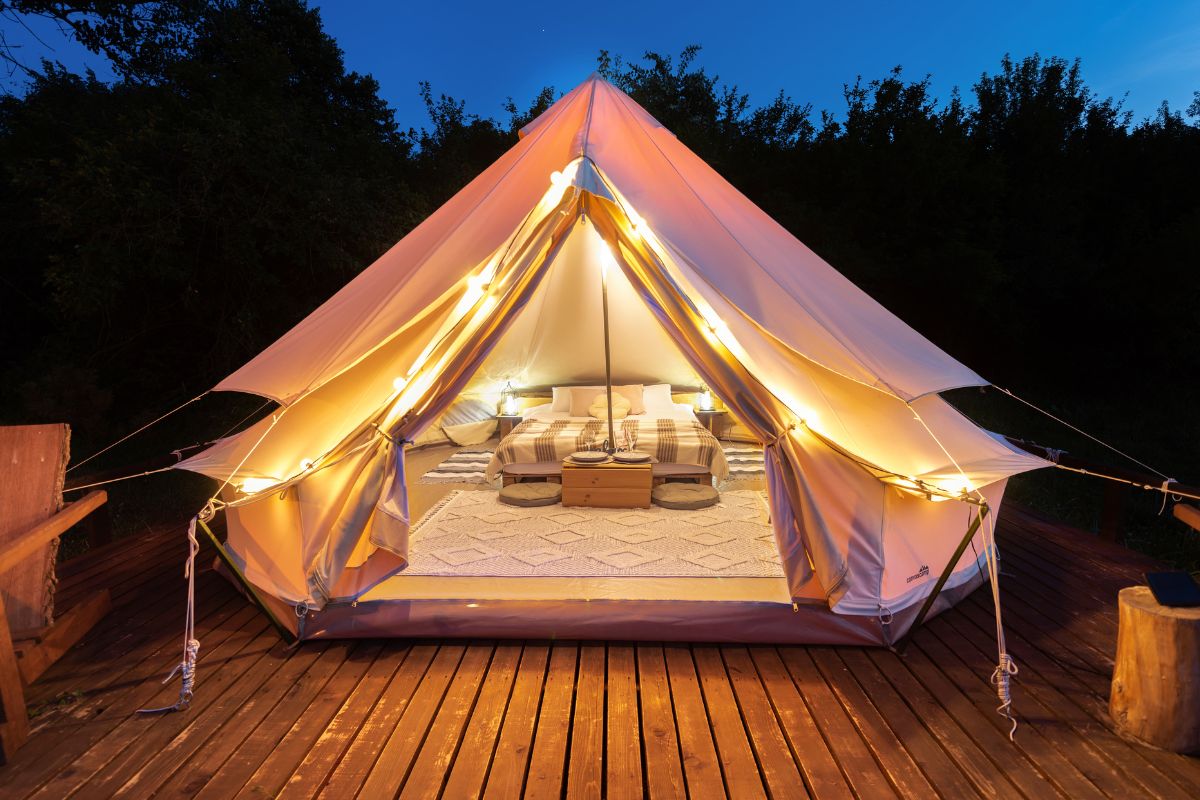
Remember the days when camping meant sleeping on the rocks and hoping your tent wouldn’t leak? Not anymore. Folks are laying out $500 a night to sleep in canvas tents with king beds, air conditioning, and WiFi. This is the glamping economy, where “roughing it” means you have to wait for your internet to load.
The numbers are wild. The global glamping market hit $3.45 billion in 2024 and researchers think it’ll reach $6.18 billion by 2030. That’s about 10% growth every year, which beats most traditional hotels right now.
How This Happened
A decade ago, glamping was whatever niche thing rich people did on safari. Now it’s everywhere. Some 34% of new campers in 2023 chose glamping, up from 18% in the class of 2021. That’s nearly twice as high as two years ago. Some 15.6 million new people tried glamping over the last five years.
Millennials and Gen Z do not want to rough it the way their parents did. They want nature, sure, but also a proper mattress and somewhere to charge their phones. People aged 18 to 32 make up over 43% of bookings, which tells you who’s driving this.
The Glamping Business Model
Here’s what’s smart about it. Hotels need massive buildings, elevators, and lobbies. Glamping sites just need land and structures that cost way less to build. A luxury tent costs way less than a hotel room to set up, but you can charge nearly the same rates.
Cabins and pods account for over 43% of the market, and those are basically prefab units you install in weeks. You’re not dealing with building codes for high-rises. Put up some nice tents or cabins, add WiFi and hot water, and done.
Big hotel chains noticed. Hyatt partnered with Under Canvas and added 13 properties in July 2024. Hilton did the same with AutoCamp in February 2024. When Hilton and Hyatt get involved, there’s serious money being made.
Where International Glamping Is Growing
Europe dominates with over 35% of the global market. Makes sense. Europeans have always been into outdoor holidays. France, Italy, and Portugal are building eco-certified sites with solar panels and recycled materials. The Human Company raised $130 million to expand glamping in Italy. That’s real investment money.
The U.S. market is growing even faster at 12.8% annually. Americans spent $1.2 trillion on travel in 2022, and a big chunk went to outdoor experiences. National parks like Yellowstone now have luxury glamping nearby. You can see Old Faithful and sleep in Egyptian cotton sheets.
Asia’s catching up. The region is growing at 10.8% per year, with Japan, Australia, and India building wellness glamping sites. Yoga retreats, meditation, and spa treatments, all in the middle of nowhere with good views.
Sustainable Travel Trends Meet Money
Glamping touts itself as eco-friendly tourism, and it is both true and marketing genius. Some 84% of travelers claim that sustainable travel is important, while about 33% say they have stayed in sustainable accommodations in the recent past.
Sites employ solar power, composting toilets, and recycled materials. Under Canvas utilizes solar panels at their sites in the U.S. Whether it’s actually better than a hotel is open to debate, but it feels more sustainable, and perception counts for a lot.
Australia earmarked $50 million in 2023 for glamping projects in the countryside. That money contributes to the betterment of local economies. So yeah, you’re paying $400 a night for a tent, but theoretically some helps the community.
Who’s Booking
Over 55% of bookings happen directly through the site’s website. People want to customize stays and get that personal touch. Glamping operators offer perks for direct bookings like upgrades and discounts. Keeps margins higher when you’re not paying commission to Booking.com.
Families are huge. Parents want kids to experience nature without the actual camping hassle. Nobody wants to set up tents with screaming toddlers. Glamping solves that. You get the outdoor experience without the misery.
Corporate retreats book these too. Companies want team building that’s not another conference room. Send everyone glamping, do some hiking, and call it professional development.
The Tech Nobody Talks About
Sites are getting high-tech. Solar-powered energy systems, smart lighting that adjusts based on natural light, and contactless check-in. Some sites have floating domes, treehouses with glass floors, even subterranean lodges. The industry keeps pushing what counts as glamping versus weird luxury hotels in nature.
What Could Go Wrong
Regulations are a mess. Sites face challenges with zoning and permits, which can block development for years. Weather’s another problem. Seasonality remains a major challenge. A Vermont site isn’t making money in January. Southwest sites deal with extreme heat in summer. Shorter operating season than hotels in most places.
And there’s the bubble question. When times get rough, people cut $500-a-night tent stays pretty quick. The industry’s new enough that nobody knows how it handles a real recession.
Where It’s Heading
Smart money thinks glamping’s here to stay. Private equity firms are buying RV resorts and converting them. That’s calculated bets on long-term returns, not speculation.
Success comes down to location and storytelling. You need somewhere scenic people want to visit. But you also need authentic experiences. Generic sites don’t do as well as places that lean into their unique characteristics and local culture.
Operators who own their land make real money. They can deliver consistent quality and justify premium pricing. They’re not dealing with landlord issues or short-term leases.
Social media keeps driving growth. Instagram and TikTok are basically free marketing. Visual appeal creates this cycle where more posts lead to more bookings, which lead to more posts.
The Reality
The glamping economy works because it solved a problem people didn’t know they had. Turns out lots of folks want nature but don’t want to actually camp. They want the experience without discomfort. They want Instagram photos that look adventurous without sleeping on the ground.
The market is estimated to reach $5.49 billion by 2029, growing more quickly than many traditional hospitality options. That growth is coming from people who want experiences over stuff, are looking for wellness retreats, the eco-conscious among us and just people who don’t want to rough it like their grandparents did.
Does paying hotel prices for a tent sound ridiculous to you? Maybe. But people booking these trips don’t think so. And as long as there’s demand for nature with luxury, the glamping economy will keep growing.
Beats sleeping on rocks, anyway.